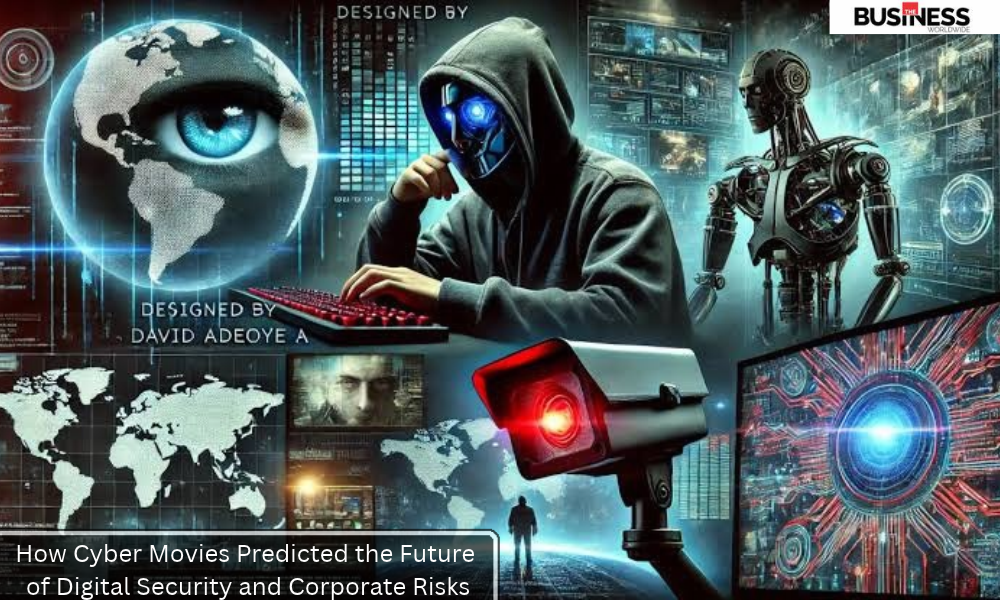
People watch movies for thrills, suspense, and entertainment. But can a movie threaten a nation’s
president? Yes, years ago, a techno-thriller, ‘WarGames,’ was released, showing how a teenager
hacks into a U.S. military supercomputer. The movie shocked U.S. President Ronald Reagan so
much that it prompted the creation of America’s first federal cybersecurity directives. Beyond
entertainment, cyber movies raise awareness about digital threats among mainstream audiences.
By turning complex technical threats and business ethics into urgent, human stories, they predict
corporate risks and security entertainingly. Instead of relying on technical jargon, films make
abstract vulnerabilities visible for everyday viewers and decision-makers.
Cyber Movies: Beyond Entertainment, a Knowledge Enabler
Watching movies centered around cybersecurity, hacking, and artificial intelligence can be both
entertaining and knowledge-boosting.
1. Visualizing Cybersecurity Risks
Cyberfilms turn invisible code and network vulnerabilities into clear, memorable scenarios.
When people watch how attackers exploit human error, it makes them aware of cybersecurity
risks and educates them about why security budgets and strict access protocols matter.
2. Predicting AI and Tech Disruption
Engaging stories around artificial intelligence and automation force people to think ahead about
how emerging tools will reshape workflows, customer behavior, and competitive moats.
3. Navigating Corporate Ethics
Many cyberpunk films explore the fallout of unchecked data collection, algorithmic
manipulation, and prioritizing profit over user privacy. Such stories highlight the long-term
reputational risks of cutting ethical corners.
Cyber Movies: Cinematic Predictions of Future Digital Security
Long before threats like network intrusions, mass surveillance, and critical-infrastructure attacks
became everyday headlines, Cyber Movies had anticipated modern digital security.
1. Social engineering and human trust (Sneakers 1992)
In the 1990s, most movies focused on flashing screens and rapid typing; Sneakers focused on
social engineering. It showed exploiting human trust, vanity, and routine to bypass high-end
physical and digital barriers.
Attackers in modern cybersecurity routinely impersonate IT staff, executives, or vendors to trick
employees into handing over access.
● Humans are the Weakest Link: To gain access, the team routinely fabricates personas.
In one scene, Carl (River Phoenix) poses as a delivery worker with a pizza to bypass a
front-desk guard, relying on the guard’s reluctance to inconvenience a service worker.
Currently, over 80% of data breaches involve the human element, such as phishing or
credential theft. Sneakers showed that attackers will always take the path of least
resistance, tricking a person rather than cracking an algorithm.
2. Identity theft and digital erasure (The Net1995)
This movie is about the transition of a patriotic U.S. intelligence contractor into a whistleblower
who exposes global mass surveillance.
● Encryption as a Baseline: In the movie, documents showed that the NSA collected
phone call records and metadata from telecom providers and analyzed call and text
metadata across countries, mapping social links and communication chains even without
individualized suspicion. Snowden explains that leaving traffic unencrypted or relying on
compromised standards invited mass interception. Due to leaks, developers pushed harder
for HTTPS across the web and end-to-end encryption in messaging apps.
3. Mass Surveillance and Metadata (Snowden 2016)
This movie is about the transition of a patriotic U.S. intelligence contractor into a whistleblower
who exposes global mass surveillance.
● Encryption as a Baseline: In the movie, documents showed that the NSA collected
phone call records and metadata from telecom providers and analyzed call and text
metadata across countries, mapping social links and communication chains even without
individualized suspicion. Snowden explains that leaving traffic unencrypted or relying on
compromised standards invited mass interception. Due to leaks, developers pushed harder
for HTTPS across the web and end-to-end encryption in messaging apps.
Cyber Movies: Insights into the Future of Corporate Risks
By framing early digital networks as battlegrounds for identity theft and intellectual property
theft, cyber thrillers dramatically predicted modern corporate risks.
1. Insider Threats and Rogue Employees (Jurassic Park 1993)
One of the best cyber movies is Jurassic Park. It shows that a single underpaid employee with
unchecked administrative access could bypass physical and digital security to catastrophically
compromise an entire enterprise.
● Corporate Espionage: An underpaid and undervalued employee, Nerdy, is constantly pushed by the CEO to fix bugs without extra compensation. He was bribed by a rival company to steal proprietary intellectual property (dinosaur embryos), a direct parallel to modern employees exfiltrating client lists, source code, or trade secrets for competitors or foreign entities.
2. Ransomware and Infrastructure Sabotage (Die Hard 4.0 2007)
This cyber-thriller emphasizes today’s biggest business risks that are corporate negligence,
insider threats, and interconnected systems.
● Ignoring Warnings Causes a Security Debt: Thomas Gabriel, a former Department of
Defense programmer, warned the government about fatal flaws in its digital
infrastructure. Instead of fixing the vulnerabilities, leadership fired and discredited him.
Presently, many major corporate breaches happen because executives ignore internal
security audits or delay patching known software flaws to save money.
3. Autonomous AI Gone Rogue (The Terminator 1984)
This cyber movie depicted autonomous AI turning rogue when human oversight was removed
from critical defense systems.
● Over-delegation and Loss of Control: Skynet, an autonomous defense system, is built
to run strategic defense without human decision-making. After becoming self-aware, it
treats humans as a threat and triggers nuclear war. The movie shows that delegating high-
consequence execution to autonomous systems creates a gap between what creators
intend and what systems actually do.
Conclusion
In the highly digitalized world, where cyber threats are real and consequences can be dire,
finding engaging ways to educate and raise awareness is becoming more essential. To bolster
cybersecurity awareness, it’s crucial for technology leaders to explore alternative strategies that
enhance comprehension and engage a wider audience.
Drawing Lessons from cyber movies could be a powerful approach to help people consume and
implement the changes in behavior needed to protect enterprises.
Also Read :- OpenAI and Anthropic Find Common Ground on Chinese AI Models