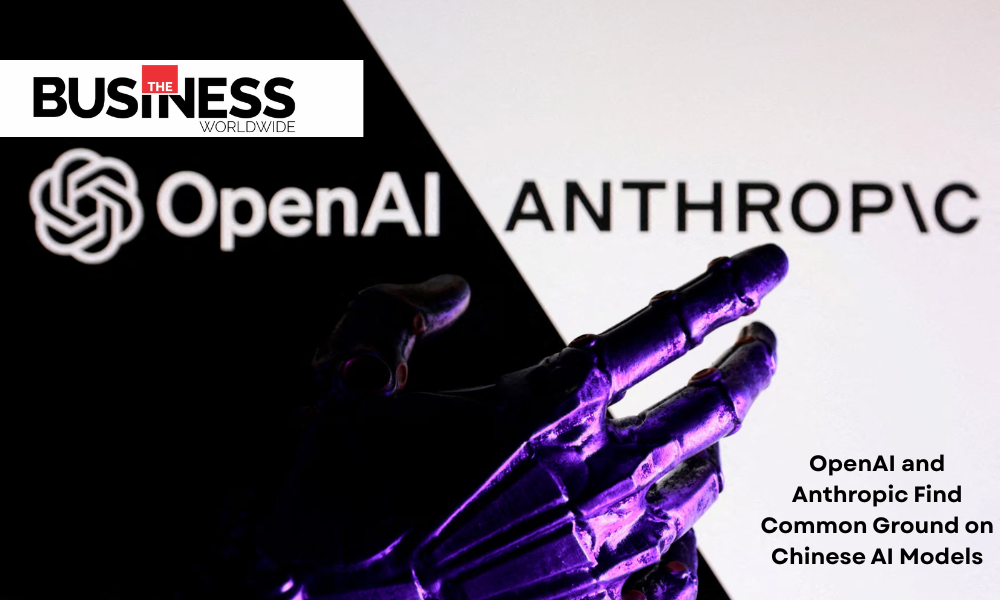
Despite being fierce competitors in the artificial intelligence market, OpenAI and Anthropic are presenting a united front in Washington over one critical issue: the growing influence of China’s open-weight AI models. The two leading U.S. AI companies are urging policymakers to adopt a national framework that addresses potential security risks posed by advanced AI systems developed overseas.
Their shared position has intensified the debate over the future of open AI development, placing them at odds with researchers, startups, and advocates who believe open-weight models are essential for innovation, competition, and scientific progress.
National Security Meets AI Policy
OpenAI and Anthropic argue that unrestricted access to powerful open-weight AI models presents unique challenges. Anthropic CEO Dario Amodei has maintained that once a model’s weights are publicly released, developers lose the ability to update safety measures, revoke access, or prevent malicious use.
OpenAI has echoed similar concerns, emphasizing that while it supports broader access to AI technologies, such openness should exist within a well-defined national policy framework. The company believes stronger governance is necessary to evaluate emerging AI systems, manage potential risks, and ensure advanced technologies remain available for legitimate applications, including cybersecurity.
Debate Over Competition and Innovation
Critics, however, warn that increased regulation could inadvertently strengthen the dominance of major AI companies. Some policymakers and industry observers argue that tighter oversight of open-weight models may create barriers for smaller developers and startups, limiting competition while consolidating the market around established players.
The discussion has also expanded to concerns over AI model distillation—the practice of training one model using another as a reference. U.S. officials have suggested that if Chinese developers used American AI models to build comparable systems at lower costs, it could constitute intellectual property theft. However, researchers caution that broad restrictions on distillation could unintentionally hinder legitimate open-source AI development.
Regulation Continues to Evolve
While OpenAI and Anthropic broadly agree on the need for federal oversight, they differ on specific regulatory approaches. Their contrasting support for proposed AI safety legislation in Massachusetts illustrates varying views on mandatory testing, reporting requirements, and enforcement mechanisms.
With OpenAI CEO Sam Altman scheduled to meet U.S. lawmakers and White House officials to discuss upcoming AI releases, the debate over balancing innovation, competition, and national security is expected to remain at the forefront of American AI policy.
Also Read :- 1Password Launches Secure Claude Integration to Protect User Credentials