ON Semiconductor to Acquire Synaptics in $7 Billion Deal to Accelerate Physical AI Strategy

ON Semiconductor (onsemi) has announced plans to acquire Synaptics in an all-stock transaction valued at nearly $7 billion, marking the largest acquisition in the company’s history. The deal is aimed at expanding onsemi’s capabilities in physical artificial intelligence (AI) and intelligent edge computing, strengthening its position in one of the fastest-growing segments of the semiconductor industry.

According to the company, the acquisition is expected to significantly broaden its product portfolio while increasing its total addressable market by $30 billion, bringing the opportunity to an estimated $243 billion by 2030.

Expanding into Intelligent Connected Systems

The acquisition will combine onsemi’s expertise in power management, sensing technologies, and silicon carbide solutions with Synaptics’ strengths in connected computing, human interface technologies, and AI-enabled edge processors.

Commenting on the transaction, ON Semiconductor CEO Hassane El-Khoury said the deal would immediately enhance the company’s connected computing capabilities while expanding its software ecosystem. He noted that customers are increasingly seeking intelligent, integrated systems capable of delivering real-time decision-making across automotive, industrial, and consumer applications.

The move reflects the growing importance of physical AI—technology that enables machines, vehicles, robots, and smart devices to interact intelligently with the physical world through advanced sensing, computing, and automation.

AI Acquisition Race Intensifies

The transaction comes amid a wave of strategic acquisitions across the technology sector as companies race to strengthen their AI capabilities.

Earlier this week, Qualcomm acquired infrastructure startup Modular to enhance its AI software portfolio, while Salesforce recently announced plans to purchase AI-powered customer service platform Fin in a deal valued at approximately $3.6 billion. These investments underscore the industry’s shift toward building comprehensive AI ecosystems that combine hardware, software, and edge intelligence.

Deal Structure and Market Response

Under the terms of the agreement, Synaptics shareholders will receive 1.350 shares of ON Semiconductor common stock for each Synaptics share they own. The transaction is expected to close by mid-2027, subject to shareholder approval and customary regulatory clearances. A Synaptics representative will also join ON Semiconductor’s board following the completion of the acquisition.

Investor reactions were mixed following the announcement. ON Semiconductor shares declined by approximately 6% in after-hours trading, while Synaptics shares rose around 13%, reflecting optimism over the acquisition premium.

With the acquisition, ON Semiconductor aims to strengthen its leadership beyond automotive and electric vehicle applications, positioning itself as a key player in the next generation of AI-powered intelligent systems.

Also Read :- Despite the RAM Crisis, Samsung Goes Nearly Zero Margin on Its 9100 PRO 2TB PCIe 5.0 SSD

Goldman Sachs Turns Bullish on Customer Experience Software Stocks Amid AI-Driven Industry Shift

Goldman Sachs has initiated or assumed coverage on several customer experience software companies, expressing a positive outlook on the sector as artificial intelligence continues to transform how businesses engage with customers. The investment bank assigned Buy ratings to Twilio, Braze, and Klaviyo, while maintaining a Neutral rating on Zeta Global, citing varying growth prospects and competitive advantages across the industry.

AI Reshaping the Customer Experience Landscape

According to Goldman Sachs analyst Callie Valenti, the rapid adoption of AI is creating significant opportunities for software providers that offer differentiated technology platforms and are well-positioned to capitalize on evolving enterprise needs.

The firm believes companies that combine strong infrastructure capabilities with innovative product development stand to gain market share as organizations rethink customer engagement strategies in an increasingly AI-driven environment.

Valenti noted that Goldman Sachs favors businesses that can benefit from structural changes brought about by AI, particularly those entering new product cycles and offering technology that can support next-generation customer experiences.

Twilio, Braze, and Klaviyo Receive Buy Ratings

Goldman Sachs set a price target of $300 for Twilio, $34 for Braze, and $26 for Klaviyo. Zeta Global received a price target of $28 alongside its Neutral rating.

Among the companies highlighted, Twilio was identified as a major beneficiary of AI-driven changes in customer service. Goldman believes the company is well-positioned to capture increasing demand for intelligent communication solutions and sees additional growth potential in the expanding voice technology market.

Braze and Klaviyo were singled out as particularly attractive opportunities. The bank argued that both companies have underperformed due to broader concerns surrounding AI’s impact on application software businesses. However, Goldman believes the market has overlooked the strength of their underlying technology infrastructure and their ability to leverage AI as a competitive advantage.

Strong Growth Potential Ahead

For Braze, Goldman projects a path toward operating margins of approximately 20% within the next three years as the company continues to improve efficiency and scale its operations.

Klaviyo, meanwhile, is expected to benefit from multiple growth drivers. Goldman highlighted opportunities to expand its customer service offerings while continuing to deepen its presence within the Shopify ecosystem. The bank believes there remains significant room for growth as merchants increasingly adopt integrated marketing and customer engagement solutions.

Why Goldman Remains Cautious on Zeta?

While Goldman sees value in Zeta Global’s business model, its Neutral rating reflects a more balanced risk-reward profile. The firm noted that mergers and acquisitions have played an important role in driving returns for Zeta, distinguishing it from peers that rely more heavily on organic growth initiatives.

Overall, Goldman Sachs views the customer experience software sector as a key beneficiary of the AI revolution, with select companies positioned to emerge as long-term winners as enterprises modernize customer engagement strategies.

Also Read :- Amid 2026 Energy Turbulence, Industry Heavyweights Continue To Thrive

Amid 2026 Energy Turbulence, Industry Heavyweights Continue To Thrive

The global energy sector has experienced one of its most volatile periods in recent history, yet many of the world’s largest oil and gas companies have emerged stronger despite unprecedented geopolitical disruptions.

The year began with a major supply shock following escalating tensions in the Middle East and the temporary disruption of oil flows through the Strait of Hormuz, a critical route for nearly 10% of global oil supply. Crude prices surged past $110 per barrel during the peak of the crisis, more than double their levels at the start of the year. However, contrary to market expectations, prices never reached the record highs seen during previous energy crises. As shipping routes gradually reopened and supply concerns eased, oil prices retreated below $80 per barrel.

Strong Fundamentals Drive Performance

Despite fluctuating commodity prices, leading global energy sector companies have continued to demonstrate resilience. Strong balance sheets, disciplined spending strategies, and operational efficiency have enabled many firms to capitalize on market disruptions while maintaining investor confidence.

The world’s largest integrated energy companies remained firmly positioned at the top of industry rankings, supported by robust cash generation and diversified business models. While geopolitical uncertainty created challenges, it also presented opportunities for well-positioned players to strengthen their market standing.

Standout Corporate Performers

Among the notable success stories, BP delivered a significant turnaround. Improved profitability, stronger project execution, and renewed strategic focus helped the company recover from previous years marked by substantial asset write-downs. Leadership changes and a renewed emphasis on key growth projects have further reinforced its outlook.

Valero Energy also benefited from evolving market conditions. Increased refining demand and access to lower-cost crude supplies contributed to a sharp rise in earnings, global energy sector allowing the company to improve its competitive position during a period of supply tightness.

Similarly, Repsol continued to expand its exploration footprint, particularly in Alaska, while leveraging its international operations to support growth. Canadian producer Cenovus Energy posted strong financial results as operational efficiencies and acquisition synergies strengthened overall performance.

Natural Gas Emerges As A Growth Engine

While oil prices dominated headlines, natural gas quietly became one of the sector’s strongest growth stories. Prices have more than doubled from recent lows, driven by rising demand from data centers, artificial intelligence infrastructure, and the reshoring of manufacturing activities.

global energy sector analysts believe these structural demand trends could provide long-term support for the natural gas market. Strategic buyers continue to pursue high-quality assets as energy consumption patterns evolve.

Looking Beyond The Volatility

Although uncertainty remains a defining characteristic of global energy markets, recent developments have highlighted the importance of scale, diversification, and disciplined execution. Companies that have remained focused on operational excellence and long-term value creation are proving best equipped to navigate disruption.

As the energy landscape continues to evolve, industry leaders appear well-positioned not only to withstand future volatility but also to capitalize on emerging opportunities across both traditional and next-generation energy markets.


Also Read :- Business World Wide Magazine For More information

Despite the RAM Crisis, Samsung Goes Nearly Zero Margin on Its 9100 PRO 2TB PCIe 5.0 SSD

As SSD prices continue climbing amid a broader memory market crunch, Samsung has launched one of the most aggressive storage discounts of the year. The company’s flagship 9100 PRO 2TB PCIe 5.0 SSD has dropped to $349 on Amazon, down from its $679 list price—a discount of nearly 50%. The deal is available to all customers and does not require a Prime membership.

The price cut stands out at a time when NAND flash and DRAM costs remain elevated due to surging demand from AI infrastructure projects, making premium storage products increasingly expensive.

PCIe 5.0 Performance at Full Speed

The Samsung 9100 PRO is currently the fastest consumer SSD in Samsung’s lineup. Built on the PCIe 5.0 x4 interface, it delivers sequential read speeds of up to 14,700 MB/s and write speeds of up to 13,400 MB/s. That translates to roughly twice the throughput of Samsung’s highly regarded 990 PRO, which has been a benchmark drive in the enthusiast SSD segment for the past two years.

For professionals handling large datasets, 4K and 8K video editing projects, AI workloads, or massive file transfers, the performance difference can result in significant time savings rather than simply higher benchmark scores.

Beyond sequential speeds, the drive also delivers up to 1,850K random read IOPS and 2,600K random write IOPS. These figures play a critical role in system responsiveness, application launches, and game-loading performance, where random access matters more than raw throughput.

Improved Efficiency and Thermal Management

Samsung has paired the drive with a new 5nm controller that improves power efficiency by up to 49% compared to the 990 PRO while maintaining its substantial performance gains. This helps address one of the biggest concerns surrounding early PCIe 5.0 SSDs: excessive heat generation.

Like previous flagship Samsung drives, the 9100 PRO benefits from the company’s vertically integrated approach. Samsung manufactures its own NAND flash, DRAM cache, and controller hardware, allowing tighter optimization across the entire storage stack.

Why This Deal Matters Right Now?

The timing of this discount is particularly noteworthy. The rapid expansion of AI infrastructure has fueled sustained demand for memory components, contributing to higher prices across both DRAM and NAND markets. Industry-wide cost pressures have already led to hardware price increases from several manufacturers.

Against that backdrop, the 9100 PRO’s $349 sale price represents its lowest recorded price on Amazon to date. Given the current trajectory of memory pricing, further substantial discounts may be difficult to come by in the near future.

Samsung also includes hardware-based encryption, ongoing health monitoring through its Magician software suite, and streamlined firmware updates. With a 4.8-star average rating across more than 1,500 customer reviews, the 9100 PRO has established itself as one of the highest-rated PCIe 5.0 SSDs currently available.

Also Read :- Business World wide Magazine for More Information

Nvidia Claims New AI Infrastructure Could Significantly Reduce Data Center Water Usage

As concerns grow over the environmental impact of artificial intelligence, Nvidia believes one of the industry’s most pressing challenges—water consumption in data centers may soon become far less significant. The chipmaker announced at London Climate Week that its latest generation of AI infrastructure is designed to operate with advanced liquid-cooling technology that could dramatically reduce the need for water-intensive cooling systems.

The announcement comes at a time when data centers are facing heightened scrutiny from regulators, environmental groups, and local communities. As AI adoption accelerates worldwide, the facilities powering these workloads are consuming increasing amounts of electricity and water, raising questions about long-term sustainability.

According to Josh Parker, advances in cooling technology are helping reshape that conversation. Speaking ahead of the company’s London Climate Week presentation, Parker said the industry’s water consumption challenge is becoming increasingly manageable thanks to innovations built into Nvidia’s newest AI systems.

At the heart of the development is a recirculating liquid coolant composed of water and propylene glycol, a mixture commonly used in automotive cooling systems. Unlike traditional cooling solutions, the liquid can operate at temperatures reaching 113 degrees Fahrenheit while still effectively managing heat generated by high-performance AI chips.

Rethinking Data Center Cooling

The ability to function at higher temperatures could allow data centers to reduce their dependence on energy- and water-intensive chilling equipment. In some environments, operators may even be able to eliminate mechanical chillers, creating significant efficiency gains while lowering operating costs.

Industry experts view the potential impact as substantial. Steve Solomon noted that if such technology can be widely implemented, it could remove the need for mechanical cooling systems across many regions, including warmer climates where cooling demands are traditionally high.

However, experts caution that the transition will not happen overnight. Existing facilities equipped with older cooling technologies will remain operational for years, and the pace of adoption will depend on infrastructure investments, deployment costs, and broader economic considerations. Nvidia has not disclosed pricing details for the new systems.

Beyond cooling, environmental concerns surrounding AI infrastructure extend to electricity generation itself. Depending on the energy source, producing the power required to support large-scale AI workloads can also involve substantial water consumption.

Efficiency Versus Expansion

Looking ahead, Nvidia argues that improving efficiency is essential as AI demand continues to expand. While more efficient systems may reduce the resources required for each computing task, the rapid growth of AI applications could still drive overall infrastructure expansion.

The company maintains that efficiency improvements are necessary to prevent energy requirements from escalating even faster as AI adoption increases across industries. Without technological advancements in cooling and power management, resource demands would continue to rise alongside computing needs.

At the same time, industry observers note that efficiency gains often create a paradox. As operating costs decline and infrastructure becomes more effective, organizations may accelerate AI deployment, potentially increasing overall resource consumption despite improvements at the system level.

As AI infrastructure continues to scale globally, the balance between sustainability and growth will remain a central issue. Nvidia’s latest cooling innovation may represent an important step toward reducing water usage, but the broader environmental impact of the AI revolution is likely to remain a topic of debate for years to come.

Also Read :- Business World Wide Magazine for More Information

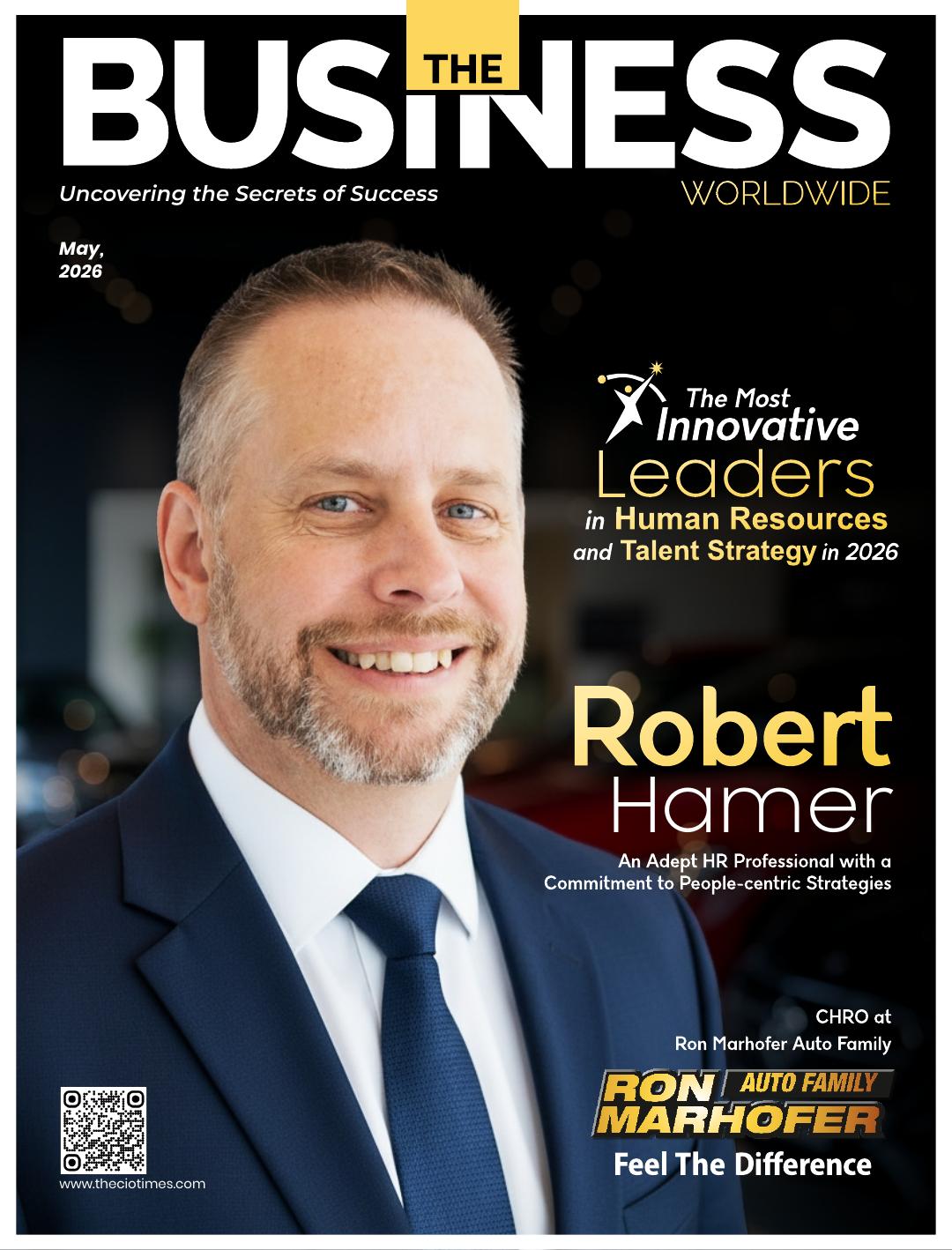
Robert Hamer: An Adept HR Professional with a Commitment to People-centric Strategies

Human resources has never been more crucial than it is today. Organizational success depends largely on the team that is involved behind it. Emerging earlier as a mere administrative department, it is now looked upon as a strategic business department and as an advisor to C-suite executives. Charting out potential employees for companies from several spectrums, like sales, marketing, finance, etc., isn’t an easy task. As technology has taken over the ship, HRs now have to also look for technically skilled candidates in fields like AI, cloud solutions, etc. Robert Hamer, CHRO at Ron Marhofer Auto Family, is a maestro of the field as he integrates his expertise to align strategic planning with nurturing culture and capabilities to deliver tangible growth.

A People Champion

He stepped into the role in July 2023, after starting with the company as an HR director in 2019. He leads HR strategy for 400+ employees, with a focus on building a workplace where people feel supported, encouraged, included, and able to grow. His approach blends business strategy with a strong people-first mindset, helping shape a culture that encourages curiosity, innovation, and development.

In December 2025, he was acknowledged by HR Tech Magazine as one of America’s Top Technology CHROs. Before Marhofer, he held HR and operations leadership roles at Vista Windows and spent over 20 years at Home Depot. He also stays actively involved with SHRM and community organizations, reflecting his commitment to people beyond the workplace.

He took a shift from operations to being a CHRO. Over two decades of his tenure in The Home Depot, in operations, and now as an HR professional, have offered him a unique perspective. The Fortune 30 retailer instilled in him this value: people are not a support function; they drive enterprise value.

He shares, “Working on the business side reveals how talent decisions affect customer experience, team performance, and financial results.”

His SPHR designation strengthened his technical expertise, but real-world operational experience shaped his ability to lead people strategy with business impact. At Ron Marhofer Auto Family, he introduced modern HR systems, automation, and digital tools that support employees and strengthen engagement. He views the CHRO role as business leadership through people. It comprises guiding talent decisions, executive strategy, and organizational growth. While the company operates in the automotive industry, he believes the business has always been, and will always be, about people.

People-centred Impact Creation

On the part of the executive team, the team intentionally focuses on a people-oriented strategy that opens doors for planning, resource allocation, and future decisions. Robert ensures the human capital investments and business outcomes are on the same page that target growth, margin, and long-term health.

He keeps customer experience as more instrumental than employee experience. To nurture an environment where customers feel valued and supported, he maintains a similar environment for the employees first. It leads to efficient business decisions.

He shares, “We connect talent investments in recruiting, onboarding, development, and retention to measurable results.

The attrition rates in the organization have been the lowest, when the industry overall sits at a rate of 46%. Employees stay together for decades. Multiple generations from the same families’ work in the organization, including Robert’s, too. This environment brings in a loyal customer base, deep knowledge, and a competitive edge to the company.

A Talent Magnet

Robert Hamer’s culture lens comprises actions, metrics, and rewards, not words. At Ron Marhofer, components like inclusivity, trust, and connection are engraved in daily operations. These aren’t just said values. The workforce accommodates five generations, different backgrounds, family dynamics, and cultures, including a large Hispanic community and many Nepalese refugees. This diversity reflects the richness in the culture.

It supports a local radio program where it hosts trick-or-treats, picnics, baseball outings, and cultural lunches where employees share food from their home countries, etc. It attracts people who believe in the team’s values. It also collaborates with Opportunities for Ohioans with Disabilities to elevate practices in inclusion. It results in more people joining in, so talent need not be chosen. The outlook of maintaining culture as a discipline has been the organization’s biggest advantage.

Efficient Pathways

In large-scale organizations across sectors like retail, manufacturing, and automotive, Robert has observed a pattern. These organizations, like The Home Depot, Vista Windows, and Ron Marhofer Auto Family, possess certain traits. He lists them down one by one:

  1. Organizations voluntarily build roadmaps to obstacles before the situation needs to be faced. At Ron Marhofer, the team is in partnership with technical schools, sponsors students, supplies tools, and brings them on as apprentices connected to the culture.

He adds, “We don’t wait for skill shortages. Proactive talent deployment sets strong organizations apart.”

  • High performers invest heavily in frontline managers, who most influence culture and performance. The closest manager shapes engagement and retention more than any executive initiative.
  • These organizations ensure visible internal mobility. The best organizations make a future with the company not just possible, but supported. True talent deployment builds both careers and organizations.

Underfunding for Skill Development

Robert Hamer focus is on succession and leadership development, but Robert has pointed out some gaps in this. A consistent gap is the assumption that top individual performance predicts leadership success. The skills for individual contribution differ from those needed to lead and inspire. The transition is harder than it looks, and organizations often underinvest in that development.

Also, leadership development remains far from practical enhancements. Leaders are prepared in a safe and monitored setting and then exposed to fast-paced environments. Then ask questions like, ‘Why are they still struggling?’.

He asserts, “Effective succession planning provides real stretch assignments and feedback, helping leaders build the resilience they need.”

His work with Ashland University is a confirmation of the statement: leaders who thrive are challenged early and consistently supported.

Keeping it Well-defined

Empathy and accountability need a balance in a sector like HR. Agreeing to the statement, Robert Hamer considers the most respectful action is to hold employees to clear standards and offer honest, caring feedback. When responsibility is carried well, it depicts a person’s capacity to grow. Moments of uncertainty emerge when expectations are unclear, rules are inconsistent, or feedback lacks genuine regard.

From The Home Depot, where scale required both consistency and nuance, to Vista Windows and Ron Marhofer, he has crafted integrity through transparency and follow-through. A colleague of his praised him as he lights up a room with his calm integrity and strategic focus while respecting cultural dynamics.

He adds, “Employees trust honest leaders, even with difficult messages. Leadership trusts HR leaders who make decisions defensible on human and business grounds.”     

Determined Set of Systems

Early in his career, Robert was a part of large and distributed workforces. Crafting alignment and consistency in culture, it requires a strong commitment to intent, as only relying on the proximity of the process will not work. A one-size-fits-all approach doesn’t work when distance and scale come into the picture. Culture needs to be defined in systems and processes of hiring, onboarding, and recognizing people. It just doesn’t work by giving commands from the top.

His tenure at The Home Depot, where he operated across a national footprint with a vast and multigenerational workforce, gave him insights into cultural consistency as a management discipline.

He asserts, “It requires managers who are trained and held accountable as cultural stewards, recognition systems that reinforce the behaviors you want to see multiply, and communication rhythms that keep the organization connected to a shared narrative. At Ron Marhofer, spanning multiple locations across Northeast Ohio, Stow, Cuyahoga Falls, Akron, and Canton, we apply those same principles.

From the very first day, the team nurtures open dialogue with each team member that results in building genuine relationships and voices for support to them and their families. This foundation remains constant across each location to company operates.

Focus on Business Results

Shifting from reporting to insight demands a transformation in method and mindset. Reporting tells what happened; strategy asks so what, and what to do differently. HR must translate people data into business consequences, not just activity metrics.

At Ron Marhofer, the team connects workforce data to executive outcomes. It also depicts the turnover costs in recruiting, onboarding, and productivity, as well as the ROI of the programs. As previously mentioned, in an industry of 46% turnover ratio, the organization has proved with a strategic conversation that it is below this rate.

He adds, “I support democratizing data: when managers see the link between engagement and their outcomes, data becomes a tool rather than just an HR metric.”

Transformation Needs Inclusivity

Alteration efforts fail due to known reasons. Initiated with urgency and sustained without a framework. Directly inform employees instead of being inclusive. The said change is an emotional change before treating it as a logical one; this approach is ignored. Robert Hamer has witnessed organizations that treat change as an ongoing management discipline and a part of a cultural evolution. It doesn’t have an end date.

He shares, “HR’s most critical role in transformation is to be the guardian of the human dimension. That means equipping leaders to communicate change authentically, not just message it. It means tracking engagement and culture signals that indicate whether change is taking root.”

It means building adaptive capacity into the organization so that agility becomes a core competency. At Ron Marhofer, the team is witnessing profound transformation, electrification, digital retailing, and shifting consumer expectations. It realizes the responsibility of seeing to it that the employees are crucial enough to see what is next. It will take place through the relationships built in the long run; it is never an overnight process.

Liberating Technology

Robert Hamer has been recognized as one of the Top 10 CHROs of 2025 by HR Tech Outlook. It outlines his loyalty to technology that serves people better and not vice versa. In his current organisation, he has welcomed advanced HR systems, automation tools, and digital platforms that empower employees to control their own work journeys, giving them greater visibility, agency, and access to the resources they need to grow.

He adds, “The administrative burden that once consumed significant HR capacity is increasingly automated, freeing us to focus on the judgment-intensive work that technology cannot replicate: building relationships, developing leaders, and shaping culture.”

For automotive specifically, where the workforce is evolving alongside EV transition, digital retail, and a persistent technician shortage, the ability to be predictive rather than reactive is a genuine competitive requirement. The CHROs who will have the greatest influence over the next decade are those who translate digital capability into human insight and strategic action, and who ensure that technology enhances rather than replaces the human connections at the heart of great organisations.

Clarity Elevates Performance

Psychological safety and clarity in operations are prerequisites for Robert Hamer when operating in high-performance environments in sectors like retail, manufacturing, and automotive. Employees deliver more than expected where the trust the system to be fair and leadership to be honest.

He shares, “The design principle I return to most often is this: systems should create clarity, not pressure. Clear expectations, honest feedback, visible paths to recognition and advancement, and benefits that actually respond to what employees need create the conditions for people to perform at their best.”

The leadership at Ron Marhofer evaluates the benefits and support programs periodically. Whenever a concern is raised, the response is always “let me see what I can find.” Never the opposite. This commitment to being heard is what makes the team stand out. At the end of the day, it drives the multigenerational loyalty in the workforce.

Beyond Business

Robert Hamer sees external engagement as one of the most underrated disciplines in leadership. His involvement with Ashland University’s Engineering Leadership Board, advisory work with Opportunities for Ohioans with Disabilities, leadership roles in nonprofit fundraising initiatives, and experiences as both a guest lecturer and commencement speaker have continually exposed him to perspectives and challenges far beyond his immediate professional environment.

Those experiences, he believes, serve as an important reminder of realities that organisations can sometimes lose sight of internally: that talent is competitive across every sector, workforce expectations are evolving faster than ever, and leadership is ultimately rooted in people and purpose before process. Just as importantly, they keep him closely connected to the communities from which businesses draw their talent and future leaders.

At Ron Marhofer Auto Family, he has long encouraged not only a culture that embraces the diversity of the local community, but one that actively participates in it. He believes that a meaningful relationship between an organization and its community is essential to building a company that is both resilient and sustainable. For him, maintaining an outside perspective is often what keeps leadership grounded, accountable, and deeply human.

Workforce Purpose

Robert Hamer believes the CHRO of the next decade will be defined less by traditional HR oversight and more by the ability to shape enterprise strategy at the highest level. In his view, the role is no longer evolving into a support function for the business; it is becoming a direct driver of business direction, growth, and long-term sustainability.

One of the most significant shifts, he believes, will be the rise of workforce intelligence as a critical strategic asset. The ability to anticipate talent needs, understand organizational health, and measure the impact of people investments will soon become essential to executive leadership. For Robert, CHROs who cannot combine people leadership with analytical and strategic fluency risk being excluded from the most important business conversations.

Robert Hamer also sees the boundaries of talent leadership expanding far beyond the traditional employee lifecycle. Increasingly, the responsibility of the modern CHRO will begin long before a candidate ever applies for a role through deeper engagement with educational institutions, apprenticeship pathways, and community partnerships that help shape future talent pipelines. Robert’s own educational journey through Youngstown State University, Villanova University, and Cornell University School of Industrial and Labor Relations, along with his continued work with universities and community organizations, reflects a belief he has carried throughout his career: that leadership responsibility for talent begins well before an offer letter is signed.

Perhaps most profoundly, Robert Hamer believes the future CHRO will play an increasingly important role in helping organizations define their relationship with human purpose. As automation and technological change continue transforming the workplace, employees are seeking more than stability or compensation; they are searching for meaning, growth, inclusion, and genuine opportunity.

He adds, “I often say that we may be in the automotive business, but we are really in the people business. That principle, held consistently over time, is what I believe will define the most impactful CHROs of the decade ahead.”

In his view, the organizations that can clearly articulate and deliver that human value proposition will be the ones best positioned to attract and retain exceptional talent in the years ahead.

Also Read:- The Business World Wide Magazine for more information