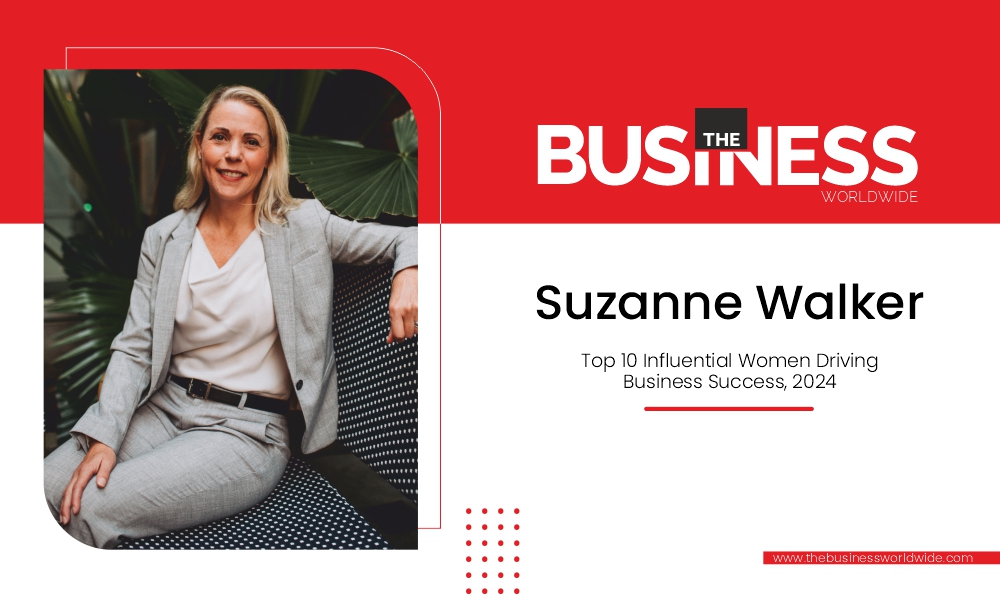
Suzanne Walker: Innovative Sales Leader Driving Growth and Empowering Connections
CallTower is a leading provider of unified communications as a service (UCaaS) and contact center as a service (CCaaS) solutions. Its mission is to deliver award-winning, business-class communication technologies that enhance efficiency and productivity for individual users and organizations alike. It offers a comprehensive suite of services that include Microsoft Teams, Cisco Collaboration, Zoom, CT Cloud Solutions, Five9, Webex Contact Center, Solgari Contact Center for MS Teams, and CT Cloud Contact Center.
Leading the Market
What sets CallTower apart in the market is its commitment to innovation, customer satisfaction, and seamless integration. It is constantly exploring new technologies and solutions to ensure its clients have access to the most advanced and reliable communication tools available. Its strategic partnerships with industry leaders like Microsoft, Cisco, and Zoom enable CallTower to offer a diverse range of solutions tailored to meet the specific needs of its clients.
Another key differentiator is its customer-centric approach. CallTower takes the time to understand its client’s unique challenges and objectives and works closely with them to develop customized solutions that drive success. Its dedicated support teams are always available to provide assistance and ensure a smooth implementation and ongoing management of its services.
“Furthermore, our ability to integrate various communication platforms into a unified system sets us apart. We understand that businesses require flexible and scalable solutions that can adapt to their evolving needs. Our integration capabilities allow us to create cohesive communication environments that enhance collaboration and streamline operations,” says Suzanne Walker, Director of Channel Sales at CallTower.
Unwavering Support
CallTower supports its clients in achieving reliable, stable, and scalable communication solutions through a combination of advanced technology, strategic partnerships, and exceptional customer service. Its approach is centered on understanding its client’s unique needs and delivering tailored solutions that drive success.
CallTower leverages cutting-edge technologies from industry leaders like Microsoft, Cisco, and Zoom to provide robust and reliable communication platforms. These platforms are designed to deliver high performance, scalability, and seamless integration, ensuring that the clients can rely on them for their critical communication needs.
CallTower’s strategic partnerships enable it to offer a diverse range of solutions that can be customized to meet the specific requirements of our clients. Whether it’s integrating Microsoft Teams with existing systems or deploying a comprehensive CCaaS solution, it works closely with its clients to develop and implement solutions that align with their business objectives.
Exceptional customer service is a cornerstone of CallTower’s support strategy. Its dedicated support teams are available 24/7 to assist clients with any issues or questions they may have. It provides comprehensive training and onboarding to ensure that its clients can fully leverage the capabilities of its solutions. Additionally, CallTower’s proactive monitoring and maintenance services help to identify and address potential issues before they impact the clients’ operations.
Scalability is a key consideration in CallTower’s solution design. “We understand that businesses need communication tools that can grow with them. Our solutions are built to be flexible and scalable, allowing clients to easily expand their capabilities as their needs evolve. This ensures that our clients can continue to rely on our solutions as they grow and adapt to new challenges,” shares Suzanne.
The Experienced Leader
Suzanne’s professional journey has been a dynamic and rewarding experience, marked by a continuous pursuit of growth and excellence. She began her career in the telecommunications industry initially working in sales and account management roles. Her early experiences in this sector exposed her to the transformative power of communication technologies and their impact on business efficiency and collaboration.
Suzanne was particularly inspired by the potential of unified communications (UC) to revolutionize the way organizations operate. The ability to integrate various communication tools into a cohesive system that enhances productivity and connectivity was a concept that deeply resonated with her. This inspiration led her to specialize in UC solutions, and she eventually joined CallTower, where she could leverage her expertise to drive innovation and deliver exceptional value to clients.
“Throughout my career, I have been motivated by the challenge of staying ahead in a rapidly evolving industry. The technological advancements and the ever-changing needs of businesses have kept me engaged and passionate about my work. At CallTower, I have had the privilege of working with a talented team and leading our efforts in the Mid-Atlantic & Southeast markets, where we continue to set new benchmarks in the UCaaS and CCaaS landscape,” reflects Suzanne.
Guiding Principle on Professional Journey
Suzanne’s working style can be described as collaborative, strategic, and customer-centric. She believes in fostering a collaborative environment where every team member feels valued and empowered to contribute their best ideas. Collaboration is the cornerstone of innovation, and by encouraging open communication and teamwork, we can achieve greater success collectively, feels Suzanne.
Strategic thinking is another key aspect of her working style. Suzanne approaches challenges with a long-term perspective, always considering how our actions today will impact our goals in the future. This mindset allows her to make informed decisions that align with CallTower’s overall business objectives and drive sustainable growth.
Customer-centricity is at the heart of everything Suzanne does. Understanding the unique needs and pain points of clients is essential to delivering solutions that truly make a difference. By putting the customers first and consistently exceeding their expectations, she helps build lasting relationships and foster loyalty.
The aims and ideals that guide Suzanne in her professional journey include integrity, innovation, and continuous improvement. Integrity is the foundation of trust, and she strives to uphold the highest ethical standards in all her interactions. “Lastly, continuous improvement is a principle that ensures we never become complacent. There is always room for growth, and I encourage my team to embrace a mindset of learning and development,” she shares.
Challenges and Opportunities in Business Communication Landscape
The current business communication landscape is characterized by rapid technological advancements and shifting work environments. Suzanne remarks that one of the primary challenges is the need for organizations to adapt to the increasing demand for remote and hybrid work solutions. As more businesses embrace flexible work arrangements, there is a growing need for robust and reliable communication tools that can support remote collaboration and ensure business continuity.
Another challenge is the complexity of managing multiple communication platforms and ensuring seamless integration. Organizations often struggle with disparate systems that hinder productivity and create inefficiencies. The challenge, observes Suzanne, lies in unifying these platforms into a cohesive and user-friendly system that enhances communication and collaboration.
Data security and privacy concerns also pose significant challenges. Per Suzanne, with the rise of cyber threats and stringent data protection regulations, businesses must ensure that their communication solutions are secure and compliant. This requires continuous monitoring, regular updates, and the implementation of robust security measures.
Despite these challenges, there are numerous opportunities in the business communication landscape. The increasing adoption of AI and automation technologies presents exciting possibilities for enhancing communication and improving customer experiences. AI-powered tools can streamline workflows, provide valuable insights, and automate routine tasks, allowing businesses to focus on more strategic initiatives.
“The demand for unified communication solutions is also driving innovation in the industry. As businesses seek to enhance their communication capabilities, there is a growing opportunity to develop and deliver advanced UCaaS and CCaaS solutions that meet their evolving needs. Companies that can offer flexible, scalable, and integrated solutions will be well-positioned to capitalize on this demand,” shares Suzanne.
Staying Ahead
CallTower stays ahead of technological advancements in the communication industry through a proactive approach to innovation, strategic partnerships, and continuous learning. It is committed to being at the forefront of the industry, and this commitment drives its efforts to stay informed and responsive to emerging trends and technologies.
Innovation is a core value at CallTower. The company invests in research and development to explore new technologies and solutions that can enhance its offerings. “Our dedicated innovation team is constantly evaluating new tools and platforms to ensure that we can provide our clients with the most advanced and effective communication solutions available,” shares Suzanne.
Strategic partnerships play a crucial role in CallTower’s ability to stay ahead. It collaborates with industry leaders like Microsoft, Cisco, and Zoom to leverage their expertise and access cutting-edge technologies. These partnerships enable it to integrate the latest advancements into its solutions and offer its clients the best-in-class communication tools.
Continuous learning is another key aspect of CallTower’s strategy. It encourages its team members to stay informed about industry developments through ongoing training, certifications, and participation in industry events. This ensures that the team is equipped with the knowledge and skills needed to implement and support the latest technologies.
“We also actively engage with our clients to understand their evolving needs and gather feedback on our solutions. This feedback loop allows us to identify areas for improvement and stay aligned with the changing demands of the market. By being responsive to our clients’ needs and proactive in our approach to innovation, we can maintain our position as a leader in the communication industry,” says Suzanne.
A Collaborative Approach to Success
Collaboration is a fundamental element of CallTower’s business strategy. It underpins the company’s approach to innovation, customer service, and internal operations. It believes that effective collaboration leads to better outcomes, and strives to foster a collaborative environment both within the organization and with the clients and partners.
“Internally, collaboration is key to driving innovation and delivering high-quality solutions. Our teams work closely across departments to share insights, brainstorm ideas, and develop new solutions. This cross-functional collaboration ensures that we leverage diverse perspectives and expertise, leading to more innovative and effective communication tools.
With our clients, collaboration is essential to understanding their unique needs and delivering tailored solutions. We engage in regular consultations with our clients to gather insights into their challenges and objectives. This collaborative approach allows us to co-create solutions that align with their business goals and deliver maximum value,” sums up Suzanne.
Quote: Innovation drives progress, and I am committed to staying at the forefront of technological advancements to offer cutting-edge solutions.
Quote: Our partnerships with industry leaders are also built on a foundation of collaboration. We work closely with partners like Microsoft.