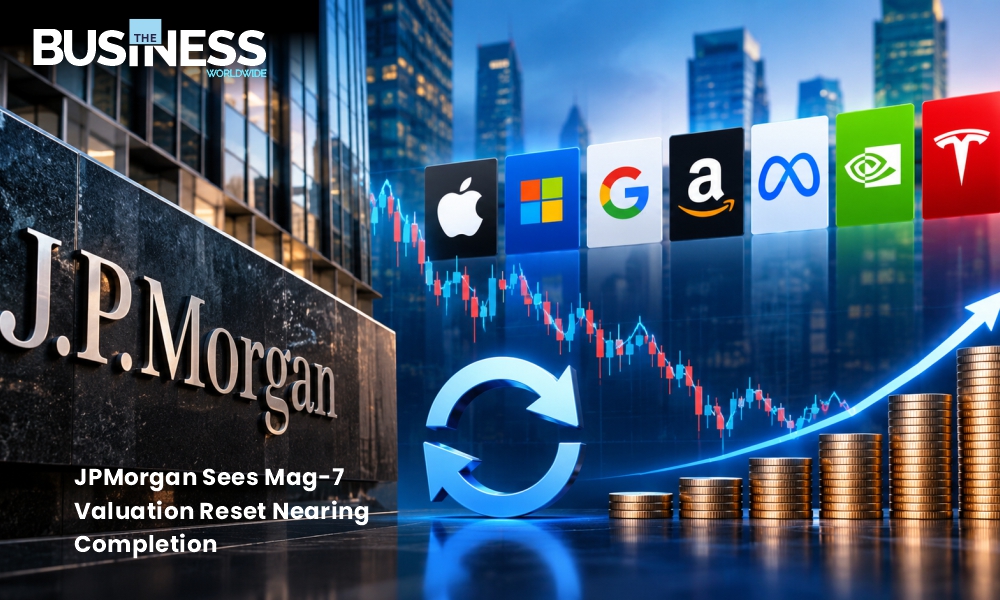
JPMorgan is signalling that the valuation decline affecting the so-called Magnificent Seven stocks may be approaching its later stages after months of relative underperformance.
The group, which includes Nvidia, Microsoft, Apple, Amazon, Alphabet, Meta and Tesla, has historically traded at a premium to the broader stock market. However, that premium has narrowed considerably as investors have reassessed valuations across the technology sector.
JPMorgan’s equity strategy team, led by Mislav Matejka, said the group’s 12-month forward price-to-earnings ratio relative to the broader market has fallen to around one standard deviation below its historical median. According to TradingView, that puts the relative valuation at a 10-year low.
Technology Stocks Under Pressure
The bank described the decline as part of a broader valuation adjustment affecting large technology companies rather than an isolated move involving the Magnificent Seven.
For much of the recent period, investors had been willing to pay higher valuations for the group because of its strong earnings growth, market influence and exposure to areas such as artificial intelligence and cloud computing. The subsequent decline in relative valuations indicates that investors have become less willing to pay the same premium.
JPMorgan’s analysis suggests that much of this repricing may already have taken place. The bank said the de-rating across the Magnificent Seven and other technology stocks has largely run its course.
What It Means for Investors?
The development is significant because the seven companies represent a substantial portion of major stock-market indexes and are widely held through index funds and other investment products.
A further shift in their relative valuation could therefore influence how investors view the broader technology sector and the overall market.
JPMorgan assessment does not mean the stocks are guaranteed to rise or that valuation risks have disappeared. Instead, it indicates that the gap between the Magnificent Seven and the broader market has narrowed substantially following an extended period of adjustment.
The group’s future performance will continue to depend on factors including corporate earnings, interest rates, economic conditions and investor expectations surrounding artificial intelligence.
For investors, the latest analysis highlights how dramatically the valuation relationship between the market’s largest technology companies and the broader market has changed. What was once a persistent premium has now moved close to its lowest relative level in a decade.
Also Read :- Wells Fargo and Citigroup Could Pursue Major Regional Bank Acquisitions