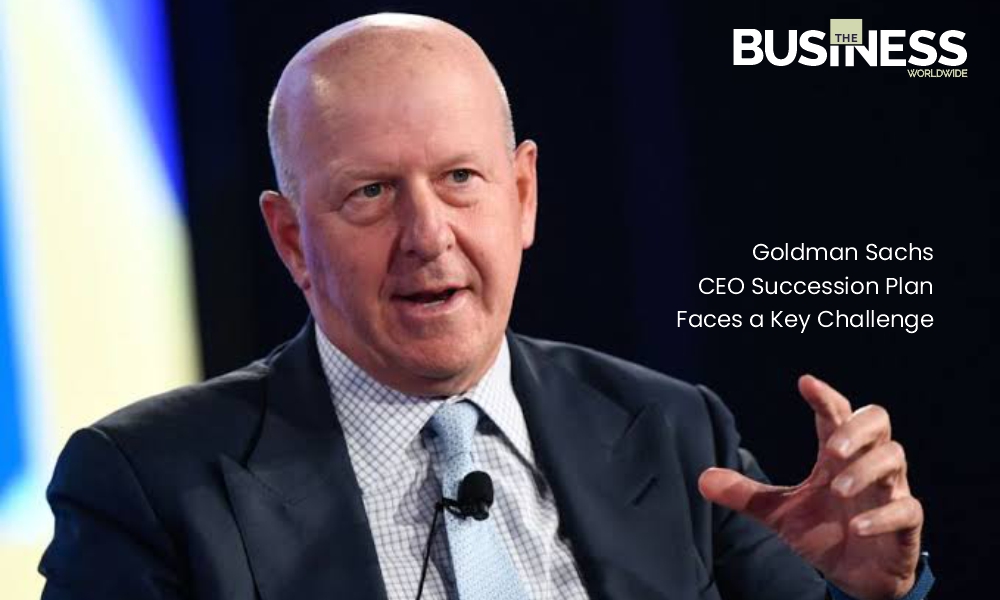
Goldman Sachs is currently enjoying strong business momentum, making its leadership succession plans especially important. The investment bank has advised on more than $1 trillion in merger deals and generated over $12 billion in equities revenue during the first six months of the year.
Against that backdrop, Goldman’s board has reportedly discussed replacing CEO David Solomon, 64, with company president John Waldron, 57, as early as next year. The Wall Street Journal reported that the proposed transition could see Solomon move into the role of executive chairman, with the board potentially voting on the plan in the coming months.
A Carefully Planned Transition
Wells Fargo banking analyst Mike Mayo described the potential change as one of the smoother and more deliberate leadership transitions on Wall Street.
However, the plan faces an important challenge: Solomon may not be ready to step aside, while Waldron may not want to wait indefinitely for the top position.
Solomon became CEO in 2018 and has helped Goldman recover from its unsuccessful push into consumer banking. A rebound in dealmaking, along with growing opportunities linked to artificial intelligence, has strengthened the bank’s position as a leading investment banking-focused institution.
Charles Elson, a retired University of Delaware law professor, noted that retiring can be difficult for a powerful chief executive, particularly as people remain active professionally for longer. Solomon also serves as Goldman’s board chairman, giving him significant influence within the organization.
Goldman spokesman Tony Fratto said there is no definitive succession timeline, adding that boards routinely consider leadership plans over different time horizons.
Potential Tension With Waldron
The succession discussion could create a delicate situation inside Goldman. Yale School of Management professor Jeffrey Sonnenfeld said it would raise governance concerns if the board were attempting to remove a high-performing CEO.
Since Solomon became CEO, Goldman Sachs shares have gained more than 300%, according to Mayo. The bank has also benefited from stronger investment banking activity and enthusiasm surrounding AI-related growth.
At the same time,Goldman Sachs Ceo Solomon could face less influence if he publicly confirms plans to leave, effectively making him a lame-duck CEO. Conversely, if he chooses to remain in charge longer, Waldron could become frustrated while waiting for the leadership opportunity.
Waldron has reportedly attracted interest from alternative asset managers Apollo and Carlyle. Goldman previously offered him an $80 million retention package running through 2030, underscoring the bank’s interest in keeping him.
The succession process therefore involves balancing continuity under Solomon with retaining Waldron, whose long-term leadership ambitions could shape Goldman’s next chapter.
Also Read :- Goldman Sachs Raises SanDisk Price Target as Strong NAND Outlook Fuels Bullish Forecast