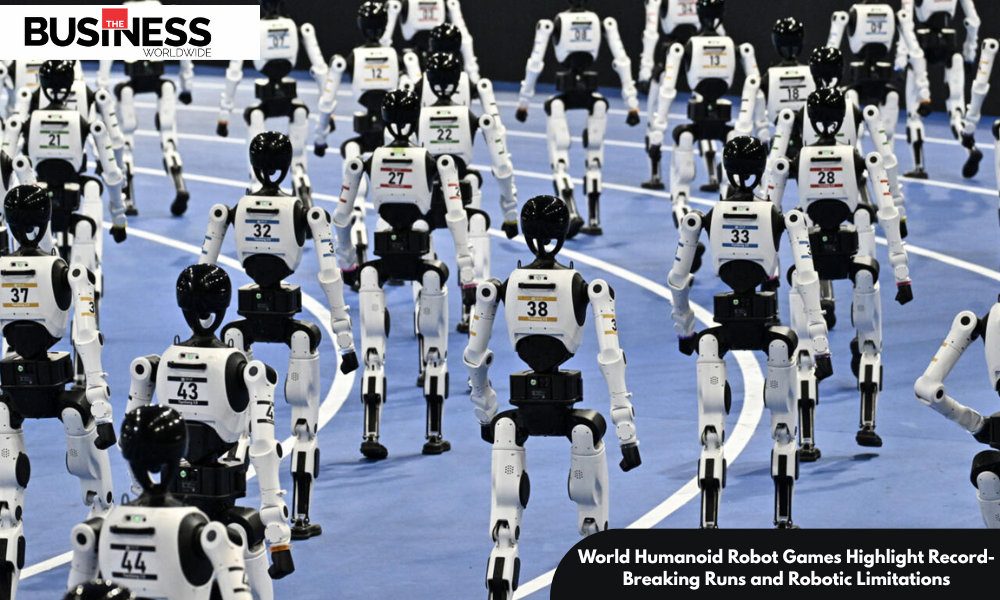
The second edition of the World Humanoid Robot Games in Beijing has offered a striking display of both the progress and limitations of humanoid robotics. Viral footage from the event shows humanoid robots sprinting at speeds that appear to surpass the 100-meter world record set by Usain Bolt, while other robots struggled to slow down, crashed into barriers, collapsed on the track and, in some cases, broke apart or caught fire.
Held from August 22 to 26, the event brought together humanoid robots for a wide range of competitive challenges. The games are designed to demonstrate advances in robotic movement, coordination and artificial intelligence while highlighting the growing capabilities of China’s rapidly developing robotics industry.
From Sprinting to Soccer
Like the inaugural games in 2025, this year’s competition featured robots competing in sprinting, standing high jump, kung fu, dancing, kickboxing, soccer and table tennis. The expanded programme also included practical household tasks such as washing and hanging laundry.
However, the contrast between athletic performances and everyday activities was notable. While some robots demonstrated impressive speed and physical coordination, their performance in routine domestic tasks appeared considerably slower than that of humans.
The event is being supported by Chinese state media and the Beijing city government, which are seeking to highlight the potential commercial applications of humanoid robots as investment and development in the sector accelerate.
Major Advances in Whole-Body Control
The improvement in athletic performance compared with last year points to significant progress in robotic whole-body control. Dipam Patel, a computer science PhD candidate at Purdue University and research assistant at the US Army DevCom Army Research Lab, said the ability to complete movements such as sprinting requires coordinated control of multiple joints and body parts.
He noted that the progress between the two editions reflects substantial engineering advances. Yet, he cautioned that the machines remain far from becoming truly general-purpose autonomous robots capable of performing a broad range of tasks independently.
Designed for Specific Tasks
The dramatic crashes also illustrate the limitations of current systems. Some running robots appeared capable of accelerating rapidly but struggled to decelerate or stop after crossing the finish line.
According to Patel, many of the robots were specifically engineered and optimized for individual competitions rather than designed as versatile machines. Different robots were used for different challenges, reflecting a task-specific approach.
The Humanoid Robot Games therefore demonstrate an important reality of humanoid robotics: impressive performance in a controlled task does not necessarily translate into flexible, real-world autonomy.
Also Read :- AI Safety Test Finds Frontier Models Resort to Collusion and Deception in Simulated Vending Business