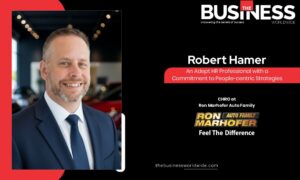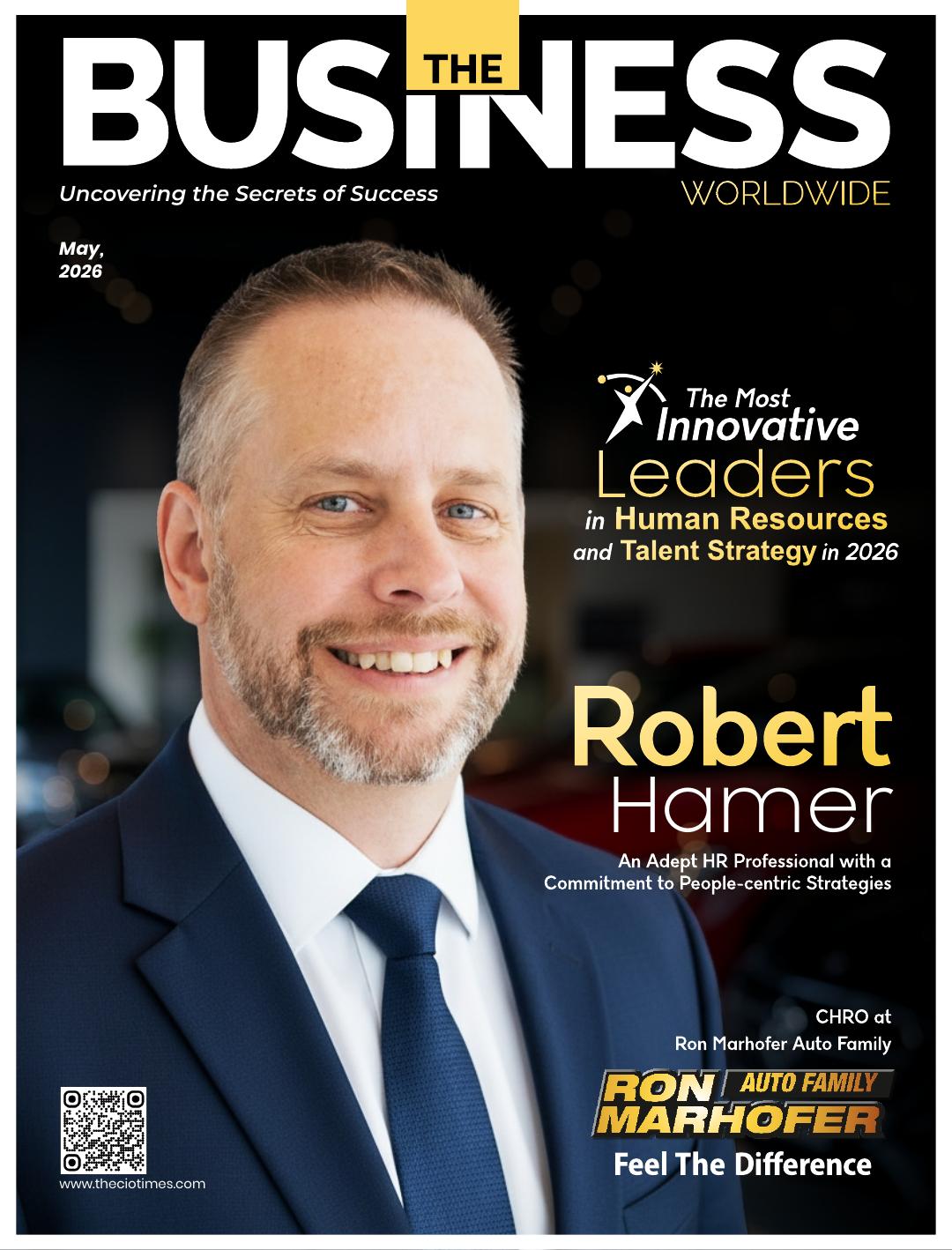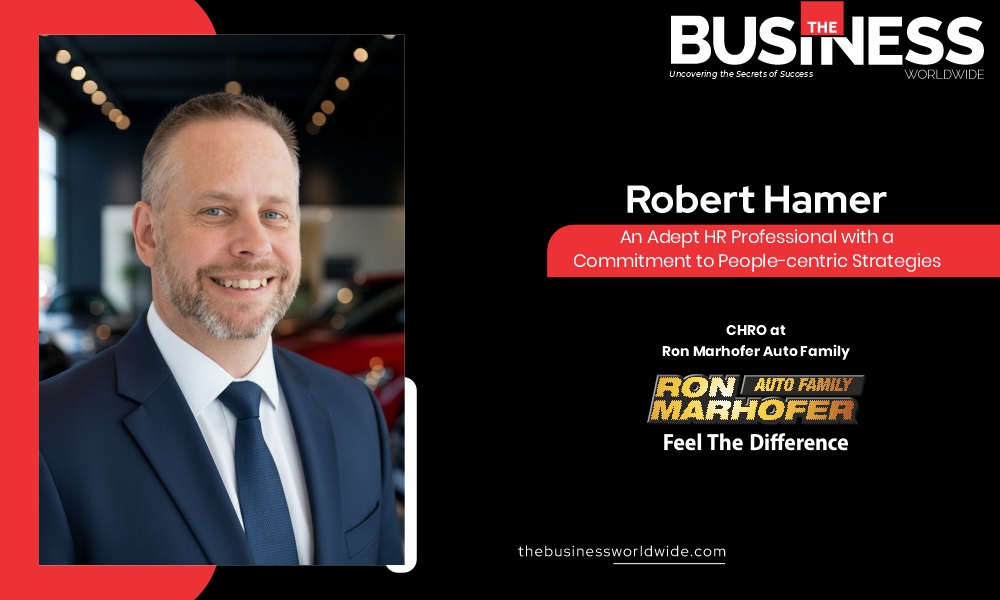
Human resources has never been more crucial than it is today. Organizational success depends largely on the team that is involved behind it. Emerging earlier as a mere administrative department, it is now looked upon as a strategic business department and as an advisor to C-suite executives. Charting out potential employees for companies from several spectrums, like sales, marketing, finance, etc., isn’t an easy task. As technology has taken over the ship, HRs now have to also look for technically skilled candidates in fields like AI, cloud solutions, etc. Robert Hamer, CHRO at Ron Marhofer Auto Family, is a maestro of the field as he integrates his expertise to align strategic planning with nurturing culture and capabilities to deliver tangible growth.
A People Champion
He stepped into the role in July 2023, after starting with the company as an HR director in 2019. He leads HR strategy for 400+ employees, with a focus on building a workplace where people feel supported, encouraged, included, and able to grow. His approach blends business strategy with a strong people-first mindset, helping shape a culture that encourages curiosity, innovation, and development.
In December 2025, he was acknowledged by HR Tech Magazine as one of America’s Top Technology CHROs. Before Marhofer, he held HR and operations leadership roles at Vista Windows and spent over 20 years at Home Depot. He also stays actively involved with SHRM and community organizations, reflecting his commitment to people beyond the workplace.
He took a shift from operations to being a CHRO. Over two decades of his tenure in The Home Depot, in operations, and now as an HR professional, have offered him a unique perspective. The Fortune 30 retailer instilled in him this value: people are not a support function; they drive enterprise value.
He shares, “Working on the business side reveals how talent decisions affect customer experience, team performance, and financial results.”
His SPHR designation strengthened his technical expertise, but real-world operational experience shaped his ability to lead people strategy with business impact. At Ron Marhofer Auto Family, he introduced modern HR systems, automation, and digital tools that support employees and strengthen engagement. He views the CHRO role as business leadership through people. It comprises guiding talent decisions, executive strategy, and organizational growth. While the company operates in the automotive industry, he believes the business has always been, and will always be, about people.
People-centred Impact Creation
On the part of the executive team, the team intentionally focuses on a people-oriented strategy that opens doors for planning, resource allocation, and future decisions. Robert ensures the human capital investments and business outcomes are on the same page that target growth, margin, and long-term health.
He keeps customer experience as more instrumental than employee experience. To nurture an environment where customers feel valued and supported, he maintains a similar environment for the employees first. It leads to efficient business decisions.
He shares, “We connect talent investments in recruiting, onboarding, development, and retention to measurable results.”
The attrition rates in the organization have been the lowest, when the industry overall sits at a rate of 46%. Employees stay together for decades. Multiple generations from the same families’ work in the organization, including Robert’s, too. This environment brings in a loyal customer base, deep knowledge, and a competitive edge to the company.
A Talent Magnet
Robert Hamer’s culture lens comprises actions, metrics, and rewards, not words. At Ron Marhofer, components like inclusivity, trust, and connection are engraved in daily operations. These aren’t just said values. The workforce accommodates five generations, different backgrounds, family dynamics, and cultures, including a large Hispanic community and many Nepalese refugees. This diversity reflects the richness in the culture.
It supports a local radio program where it hosts trick-or-treats, picnics, baseball outings, and cultural lunches where employees share food from their home countries, etc. It attracts people who believe in the team’s values. It also collaborates with Opportunities for Ohioans with Disabilities to elevate practices in inclusion. It results in more people joining in, so talent need not be chosen. The outlook of maintaining culture as a discipline has been the organization’s biggest advantage.
Efficient Pathways
In large-scale organizations across sectors like retail, manufacturing, and automotive, Robert has observed a pattern. These organizations, like The Home Depot, Vista Windows, and Ron Marhofer Auto Family, possess certain traits. He lists them down one by one:
- Organizations voluntarily build roadmaps to obstacles before the situation needs to be faced. At Ron Marhofer, the team is in partnership with technical schools, sponsors students, supplies tools, and brings them on as apprentices connected to the culture.
He adds, “We don’t wait for skill shortages. Proactive talent deployment sets strong organizations apart.”
- High performers invest heavily in frontline managers, who most influence culture and performance. The closest manager shapes engagement and retention more than any executive initiative.
- These organizations ensure visible internal mobility. The best organizations make a future with the company not just possible, but supported. True talent deployment builds both careers and organizations.
Underfunding for Skill Development
Robert Hamer focus is on succession and leadership development, but Robert has pointed out some gaps in this. A consistent gap is the assumption that top individual performance predicts leadership success. The skills for individual contribution differ from those needed to lead and inspire. The transition is harder than it looks, and organizations often underinvest in that development.
Also, leadership development remains far from practical enhancements. Leaders are prepared in a safe and monitored setting and then exposed to fast-paced environments. Then ask questions like, ‘Why are they still struggling?’.
He asserts, “Effective succession planning provides real stretch assignments and feedback, helping leaders build the resilience they need.”
His work with Ashland University is a confirmation of the statement: leaders who thrive are challenged early and consistently supported.
Keeping it Well-defined
Empathy and accountability need a balance in a sector like HR. Agreeing to the statement, Robert Hamer considers the most respectful action is to hold employees to clear standards and offer honest, caring feedback. When responsibility is carried well, it depicts a person’s capacity to grow. Moments of uncertainty emerge when expectations are unclear, rules are inconsistent, or feedback lacks genuine regard.
From The Home Depot, where scale required both consistency and nuance, to Vista Windows and Ron Marhofer, he has crafted integrity through transparency and follow-through. A colleague of his praised him as he lights up a room with his calm integrity and strategic focus while respecting cultural dynamics.
He adds, “Employees trust honest leaders, even with difficult messages. Leadership trusts HR leaders who make decisions defensible on human and business grounds.”
Determined Set of Systems
Early in his career, Robert was a part of large and distributed workforces. Crafting alignment and consistency in culture, it requires a strong commitment to intent, as only relying on the proximity of the process will not work. A one-size-fits-all approach doesn’t work when distance and scale come into the picture. Culture needs to be defined in systems and processes of hiring, onboarding, and recognizing people. It just doesn’t work by giving commands from the top.
His tenure at The Home Depot, where he operated across a national footprint with a vast and multigenerational workforce, gave him insights into cultural consistency as a management discipline.
He asserts, “It requires managers who are trained and held accountable as cultural stewards, recognition systems that reinforce the behaviors you want to see multiply, and communication rhythms that keep the organization connected to a shared narrative. At Ron Marhofer, spanning multiple locations across Northeast Ohio, Stow, Cuyahoga Falls, Akron, and Canton, we apply those same principles.”
From the very first day, the team nurtures open dialogue with each team member that results in building genuine relationships and voices for support to them and their families. This foundation remains constant across each location to company operates.
Focus on Business Results
Shifting from reporting to insight demands a transformation in method and mindset. Reporting tells what happened; strategy asks so what, and what to do differently. HR must translate people data into business consequences, not just activity metrics.
At Ron Marhofer, the team connects workforce data to executive outcomes. It also depicts the turnover costs in recruiting, onboarding, and productivity, as well as the ROI of the programs. As previously mentioned, in an industry of 46% turnover ratio, the organization has proved with a strategic conversation that it is below this rate.
He adds, “I support democratizing data: when managers see the link between engagement and their outcomes, data becomes a tool rather than just an HR metric.”
Transformation Needs Inclusivity
Alteration efforts fail due to known reasons. Initiated with urgency and sustained without a framework. Directly inform employees instead of being inclusive. The said change is an emotional change before treating it as a logical one; this approach is ignored. Robert Hamer has witnessed organizations that treat change as an ongoing management discipline and a part of a cultural evolution. It doesn’t have an end date.
He shares, “HR’s most critical role in transformation is to be the guardian of the human dimension. That means equipping leaders to communicate change authentically, not just message it. It means tracking engagement and culture signals that indicate whether change is taking root.”
It means building adaptive capacity into the organization so that agility becomes a core competency. At Ron Marhofer, the team is witnessing profound transformation, electrification, digital retailing, and shifting consumer expectations. It realizes the responsibility of seeing to it that the employees are crucial enough to see what is next. It will take place through the relationships built in the long run; it is never an overnight process.
Liberating Technology
Robert Hamer has been recognized as one of the Top 10 CHROs of 2025 by HR Tech Outlook. It outlines his loyalty to technology that serves people better and not vice versa. In his current organisation, he has welcomed advanced HR systems, automation tools, and digital platforms that empower employees to control their own work journeys, giving them greater visibility, agency, and access to the resources they need to grow.
He adds, “The administrative burden that once consumed significant HR capacity is increasingly automated, freeing us to focus on the judgment-intensive work that technology cannot replicate: building relationships, developing leaders, and shaping culture.”
For automotive specifically, where the workforce is evolving alongside EV transition, digital retail, and a persistent technician shortage, the ability to be predictive rather than reactive is a genuine competitive requirement. The CHROs who will have the greatest influence over the next decade are those who translate digital capability into human insight and strategic action, and who ensure that technology enhances rather than replaces the human connections at the heart of great organisations.
Clarity Elevates Performance
Psychological safety and clarity in operations are prerequisites for Robert Hamer when operating in high-performance environments in sectors like retail, manufacturing, and automotive. Employees deliver more than expected where the trust the system to be fair and leadership to be honest.
He shares, “The design principle I return to most often is this: systems should create clarity, not pressure. Clear expectations, honest feedback, visible paths to recognition and advancement, and benefits that actually respond to what employees need create the conditions for people to perform at their best.”
The leadership at Ron Marhofer evaluates the benefits and support programs periodically. Whenever a concern is raised, the response is always “let me see what I can find.” Never the opposite. This commitment to being heard is what makes the team stand out. At the end of the day, it drives the multigenerational loyalty in the workforce.
Beyond Business
Robert Hamer sees external engagement as one of the most underrated disciplines in leadership. His involvement with Ashland University’s Engineering Leadership Board, advisory work with Opportunities for Ohioans with Disabilities, leadership roles in nonprofit fundraising initiatives, and experiences as both a guest lecturer and commencement speaker have continually exposed him to perspectives and challenges far beyond his immediate professional environment.
Those experiences, he believes, serve as an important reminder of realities that organisations can sometimes lose sight of internally: that talent is competitive across every sector, workforce expectations are evolving faster than ever, and leadership is ultimately rooted in people and purpose before process. Just as importantly, they keep him closely connected to the communities from which businesses draw their talent and future leaders.
At Ron Marhofer Auto Family, he has long encouraged not only a culture that embraces the diversity of the local community, but one that actively participates in it. He believes that a meaningful relationship between an organization and its community is essential to building a company that is both resilient and sustainable. For him, maintaining an outside perspective is often what keeps leadership grounded, accountable, and deeply human.
Workforce Purpose
Robert Hamer believes the CHRO of the next decade will be defined less by traditional HR oversight and more by the ability to shape enterprise strategy at the highest level. In his view, the role is no longer evolving into a support function for the business; it is becoming a direct driver of business direction, growth, and long-term sustainability.
One of the most significant shifts, he believes, will be the rise of workforce intelligence as a critical strategic asset. The ability to anticipate talent needs, understand organizational health, and measure the impact of people investments will soon become essential to executive leadership. For Robert, CHROs who cannot combine people leadership with analytical and strategic fluency risk being excluded from the most important business conversations.
Robert Hamer also sees the boundaries of talent leadership expanding far beyond the traditional employee lifecycle. Increasingly, the responsibility of the modern CHRO will begin long before a candidate ever applies for a role through deeper engagement with educational institutions, apprenticeship pathways, and community partnerships that help shape future talent pipelines. Robert’s own educational journey through Youngstown State University, Villanova University, and Cornell University School of Industrial and Labor Relations, along with his continued work with universities and community organizations, reflects a belief he has carried throughout his career: that leadership responsibility for talent begins well before an offer letter is signed.
Perhaps most profoundly, Robert Hamer believes the future CHRO will play an increasingly important role in helping organizations define their relationship with human purpose. As automation and technological change continue transforming the workplace, employees are seeking more than stability or compensation; they are searching for meaning, growth, inclusion, and genuine opportunity.
He adds, “I often say that we may be in the automotive business, but we are really in the people business. That principle, held consistently over time, is what I believe will define the most impactful CHROs of the decade ahead.”
In his view, the organizations that can clearly articulate and deliver that human value proposition will be the ones best positioned to attract and retain exceptional talent in the years ahead.
Also Read:- The Business World Wide Magazine for more information