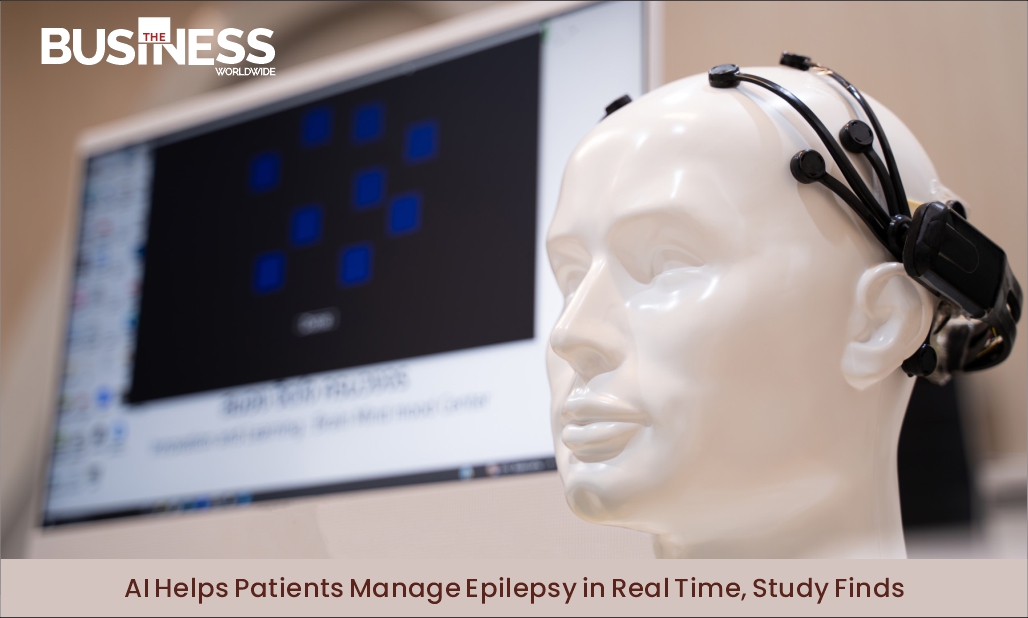
Researchers have developed an artificial intelligence (AI) platform that enables people with epilepsy to communicate with their brain-monitoring devices in real time, potentially improving seizure detection and helping patients better understand their condition.
Published in Nature Medicine on October 13, the study describes a system combining electroencephalography (EEG) monitoring, a smartphone application and conversational AI to support epilepsy management. The approach allows patients to receive health updates, report symptoms and provide feedback that can help improve seizure-detection algorithms.
How the AI System Works?
The platform connects scalp or intracranial EEG monitoring systems to a secure cloud-based computing environment. AI analyses physiological indicators related to seizure probability, sleep patterns, medication levels and brain activity.
Through a smartphone application, patients can ask questions about their health data, receive alerts about potential clinical events and complete surveys covering sleep, mood, anxiety and general well-being.
Unlike conventional monitoring devices that primarily collect data or issue alerts, this system enables two-way communication. Patients can confirm suspected seizures, flag false alarms and record symptoms, helping the technology learn from their experiences.
Patient Feedback Improves Seizure Detection
Researchers evaluated the system in 13 adult patients undergoing continuous EEG monitoring at the University of Pennsylvania’s epilepsy monitoring unit.
During the study, patients exchanged 1,307 messages with the AI platform. The researchers also examined whether feedback from patients could improve automated seizure detection.
In a simulated real-time evaluation, incorporating patient annotations reduced false alarms by 80.9% and increased the detection model’s F1 score, a measure balancing precision and sensitivity, by 158.4%.
These findings suggest that patient feedback can help refine seizure-detection systems without requiring continuous expert intervention during every update.
Further Research Needed
The researchers said the technology could eventually help people manage epilepsy outside hospitals by providing personalised insights into how sleep, medication and daily activities relate to seizure risk.
However, the study involved only 13 patients in a supervised hospital environment over a relatively short period. The findings therefore demonstrate feasibility rather than established effectiveness in everyday life.
The researchers emphasised that safeguards, privacy protections and clinical oversight remain essential as AI-powered medical technologies develop.
The team plans further research into outpatient use, with the broader goal of creating interactive medical devices that help patients and healthcare professionals manage chronic conditions more effectively.
Also Read :- CoreWeave Stock Plunges as CEO Accuses Market of Acting ‘Irrationally’