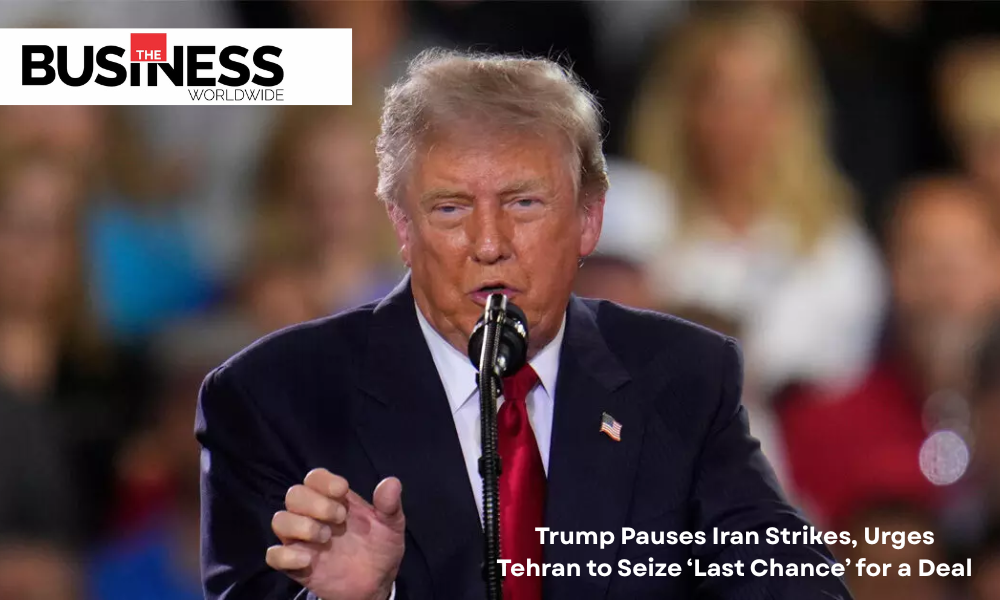
Conflicting statements from the United States and Iran over the status of diplomatic talks have heightened uncertainty surrounding efforts to end the five-month-long conflict between the two countries. The Donald Trump latest developments, coupled with continued disruptions to shipping in the Strait of Hormuz, have also renewed concerns over global energy security and trade.
While U.S. President Donald Trump indicated that negotiations with Tehran are underway, Iranian officials maintained that no such discussions are taking place, exposing a widening gap between the two sides’ public positions.
Trump Suspends Planned Military Action
President Donald Trump revealed that he had recently halted plans for what he described as “massive attacks” against Iran, saying the decision was made to allow room for diplomatic engagement.
Speaking at an Oval Office event, Trump said negotiations were progressing at the request of Iran and regional stakeholders, including Saudi Arabia, the United Arab Emirates and Qatar. He also characterised the current diplomatic window as Tehran’s “last chance” to reach a favourable agreement with the United States.
The decision to pause military action follows a pattern in which the U.S. administration has threatened significant military measures before opting to pursue diplomatic alternatives.
Iran Rejects Claims of Ongoing Negotiations
Iran, however, dismissed the U.S. President Donald Trump remarks. Foreign Ministry spokesperson Esmail Baghaei stated that no negotiations with Washington were currently taking place and that no meetings had been scheduled.
According to Baghaei, Iran has no plans to host foreign delegations or dispatch negotiators abroad in the coming days. He added that all members of Iran’s negotiating team remain in the country, with the exception of Foreign Minister Abbas Araqchi, who is currently on a religious pilgrimage in Iraq.
Baghaei said the only active discussions involve Oman and relate to the management of shipping through the Strait of Hormuz.
Strait of Hormuz Remains Under Pressure
The uncertainty surrounding diplomatic efforts continues to coincide with heightened tensions in the Strait of Hormuz, one of the world’s most strategically important maritime trade routes. The waterway carries roughly one-fifth of global crude oil and liquefied natural gas shipments, making any disruption a significant concern for international energy markets.
Maritime security concerns intensified after a cargo vessel reported being struck by an unidentified projectile near the Omani coast, according to the United Kingdom Maritime Trade Operations (UKMTO) agency.
Shipping Activity Stays Subdued
Commercial traffic through the Strait of Hormuz remained limited as security risks persisted. Data from maritime analytics firm Kpler showed that only six vessels—comprising three oil tankers and three bulk carriers—transited the strait on Monday, down from seven vessels the previous day.
The subdued level of shipping activity underscores the continuing geopolitical tensions in the Gulf and reflects the cautious approach being adopted by shipping operators amid ongoing uncertainty.
Energy Markets Monitor Diplomatic Developments
With Washington and Tehran offering conflicting accounts of the diplomatic process, global markets remain focused on whether negotiations can gain momentum and reduce tensions in the region. Until greater clarity emerges, developments in the Strait of Hormuz are expected to remain a key indicator for global energy supplies and international trade.
Also Read :- Chelan County Sheriff’s Office Secures $16,500 Grant to Expand Deputy Wellness Initiatives