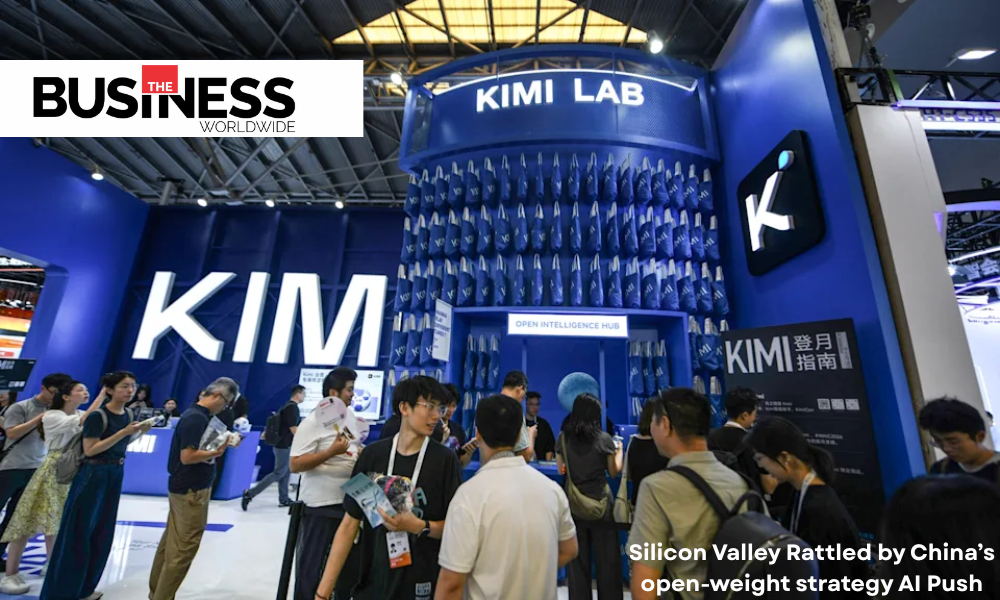
The launch of Kimi K3, a new artificial intelligence model developed by Chinese startup Moonshot AI, has sparked fresh concern in Silicon Valley, with industry leaders questioning whether China’s open-weight strategy is rapidly closing the gap with the United States in the global AI race.
Kimi K3 has drawn widespread attention after outperforming or matching several leading AI models on key industry benchmarks. More significantly, the model has reportedly achieved this performance at a fraction of the cost of many of its American rivals, reinforcing fears that China’s AI ecosystem is becoming increasingly competitive.
The development has reignited a familiar pattern in the technology industry. Every time a Chinese company unveils a major AI breakthrough, questions emerge over whether the US is losing its technological edge and whether American firms need to rethink their approach to developing advanced AI systems.
China’s open-weight strategy Sets China Apart
At the heart of the debate is a growing divergence in AI development strategies adopted by the world’s two largest economies.
Chinese AI companies have increasingly embraced open-source or open-weight models, allowing developers and researchers broader access to their technology. This approach enables the wider AI community to inspect, improve and build upon existing models, potentially accelerating innovation and adoption.
In contrast, leading US AI firms such as OpenAI, Anthropic and Google have largely opted for closed models, restricting access to their underlying technology while offering AI capabilities through commercial products and application programming interfaces (APIs). These companies argue that limiting access helps safeguard intellectual property and reduces the risks associated with misuse of advanced AI systems.
Fresh Debate in the US
The release of Kimi K3 has also revived criticism from some American technology leaders, who argue that Chinese firms benefit from research already conducted by US companies. Similar accusations have surfaced following previous AI launches from China, although critics have also pointed out the irony given that AI developers worldwide often rely on publicly available research and datasets.
The discussion intensified over the weekend after Dean Ball, OpenAI’s newly appointed Head of Strategy and a former AI adviser to US President Donald Trump, shared his concerns on social media.
Ball said he was surprised that Chinese authorities continued to permit the release of such capable open-weight models despite what he described as significant security and strategic risks.
Competing Visions for AI’s Future
Ball argued that China’s open-weight strategy could eventually lead to what he termed “AI communism,” suggesting that freely available advanced AI models could discourage heavy private investment in developing next-generation systems. In his view, widespread access to powerful AI models could reduce incentives for companies to spend billions of dollars on computing infrastructure and research.
The debate highlights a broader ideological divide over the future of artificial intelligence. As Chinese companies continue advancing open AI models while US firms maintain more tightly controlled systems, competition between the two approaches is likely to shape the next phase of global AI development.
Also Read :- 1Password Launches Secure Claude Integration to Protect User Credentials