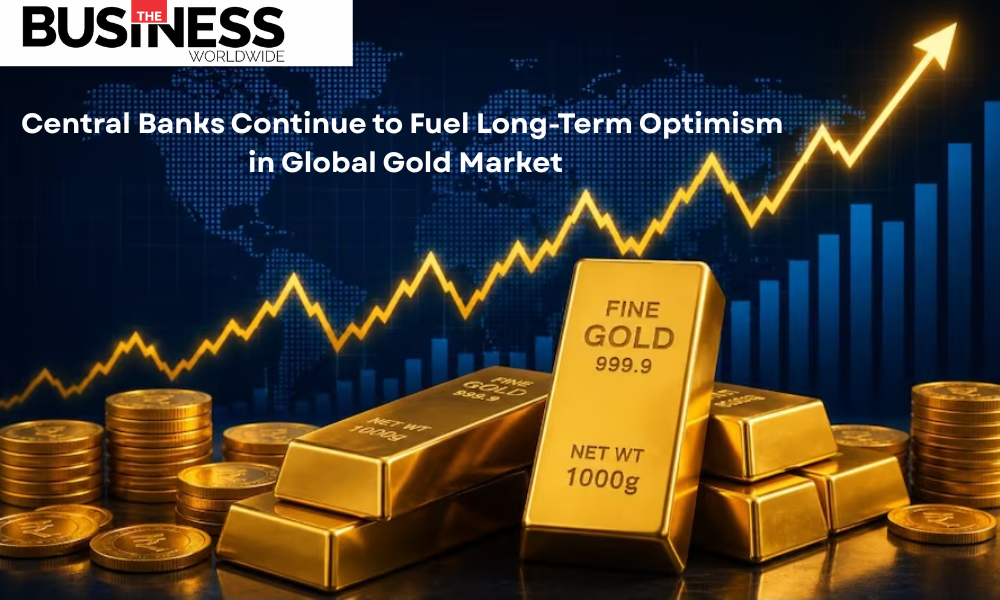
Gold prices may have retreated from their recent highs, but analysts believe the precious metal’s long-term outlook remains supported by a powerful force that extends beyond interest rates and market speculation—continued buying by central banks.
While investors often focus on U.S. Federal Reserve policy, inflation trends, and fluctuations in the U.S. dollar, recent research suggests that the sustained accumulation of gold by central banks is emerging as one of the strongest structural factors underpinning the market.
Reserve Managers Maintain Strong Confidence in Gold
A recent survey conducted by the Official Monetary and Financial Institutions Forum (OMFIF) indicates that central bank reserve managers remain highly optimistic about gold’s future role in global financial markets. According to the findings, many respondents expect gold prices to trade in the range of $5,000 to $6,000 per ounce over the next year.
Beyond price expectations, reserve managers continue to regard gold as a strategic asset that offers portfolio diversification, liquidity, and protection against geopolitical uncertainty. As global economic and political tensions persist, gold is increasingly viewed as a reliable reserve asset capable of preserving value over the long term.
Global Gold Holdings Expected to Rise
The OMFIF findings closely mirror the conclusions of the World Gold Council’s latest Central Bank Gold Reserves Survey, released earlier this year. The report revealed that 45% of central banks intend to increase their gold holdings over the coming 12 months—the highest proportion recorded in the survey’s history.
Additionally, nearly 90% of participating central banks expect overall global official gold reserves to continue expanding, highlighting sustained institutional confidence in the metal despite short-term price fluctuations.
Strategic Buying Supports Market Outlook
Market analysts note that central bank purchases differ significantly from investments made by exchange-traded funds (ETFs) or speculative traders. Rather than responding to short-term market movements, reserve managers typically acquire gold as part of long-term strategies aimed at strengthening national reserves, reducing reliance on the U.S. dollar, and holding politically neutral assets.
This steady demand is particularly significant because global mine production grows relatively slowly, creating a supportive supply-demand balance over time.
Investment bank Goldman Sachs also maintains a positive outlook, identifying sovereign purchases as one of the primary drivers of future gold demand. The firm recently projected that gold prices could approach $4,900 per ounce next year if current trends continue.
Long-Term Fundamentals Remain Intact
Although interest rates, inflation, and currency movements will continue to influence gold prices in the near term, analysts believe the market is increasingly being shaped by long-term institutional buyers. As central banks continue expanding their gold reserves, many observers argue that the precious metal’s broader bull market remains firmly supported by structural demand rather than short-term speculation.
Also Read :- Goldman Sachs Turns Bullish on Customer Experience Software Stocks Amid AI-Driven Industry Shift